Research
Current research work and academic publications
Current Research Work
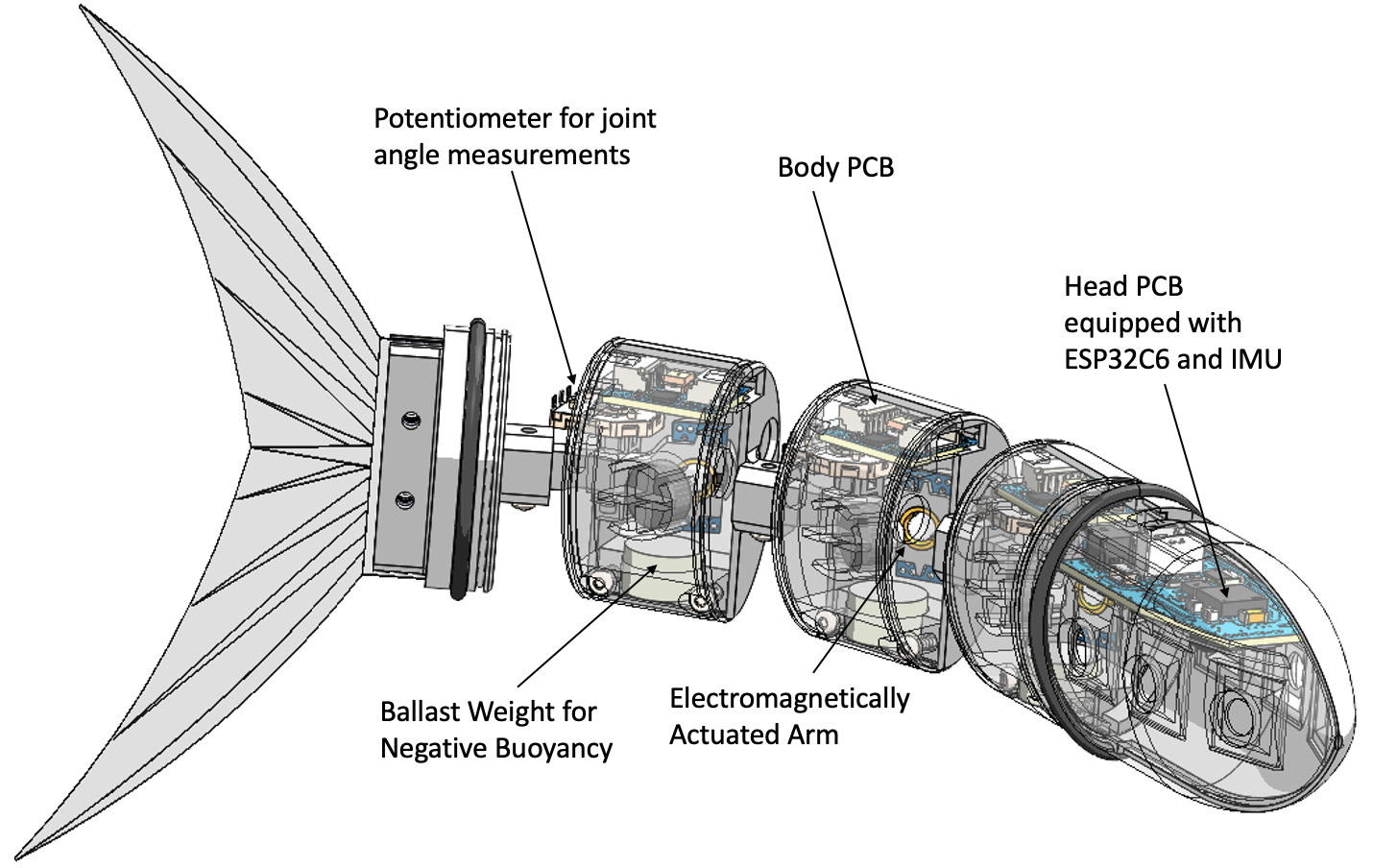
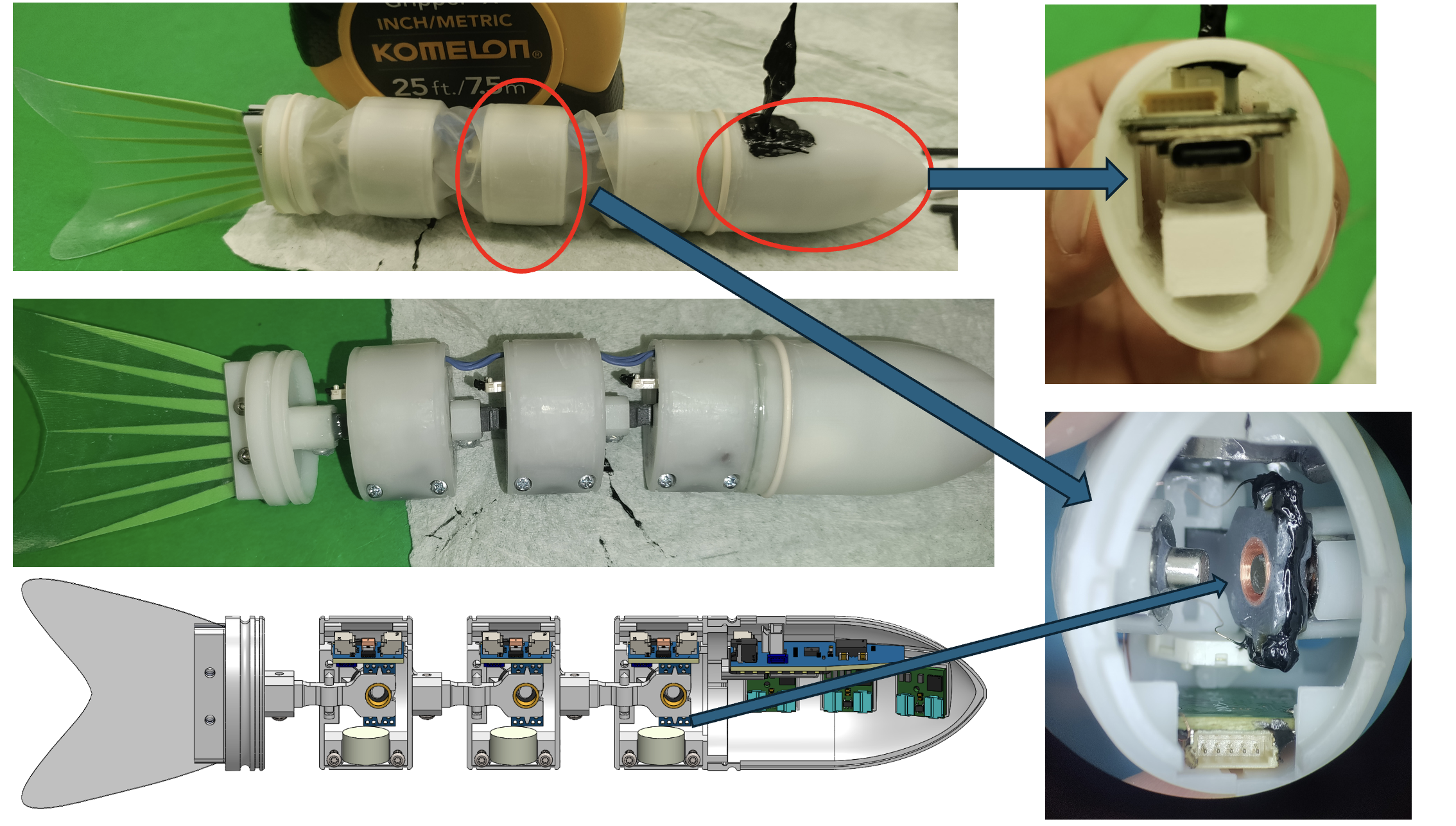
Robot Fabrication
Our MuBot is fabricated entirely from scratch using Rigid 4000 resin on an SLA 3D printer. The fabrication process involves meticulous soldering of all electrical connections and programming custom PCBs before waterproofing the robot. We connect a tether for power and communication, which replaced our previous wireless system to enable continuous experimentation without the need for recharging between trials.
Variable Stiffness Caudal Fins
Our innovative caudal fin design features variable stiffness capabilities, inspired by biological fish locomotion. This design was developed during our pilot studies and allows for dynamic adjustment of fin properties to optimize swimming performance across different conditions.
View Variable Stiffness Fins Report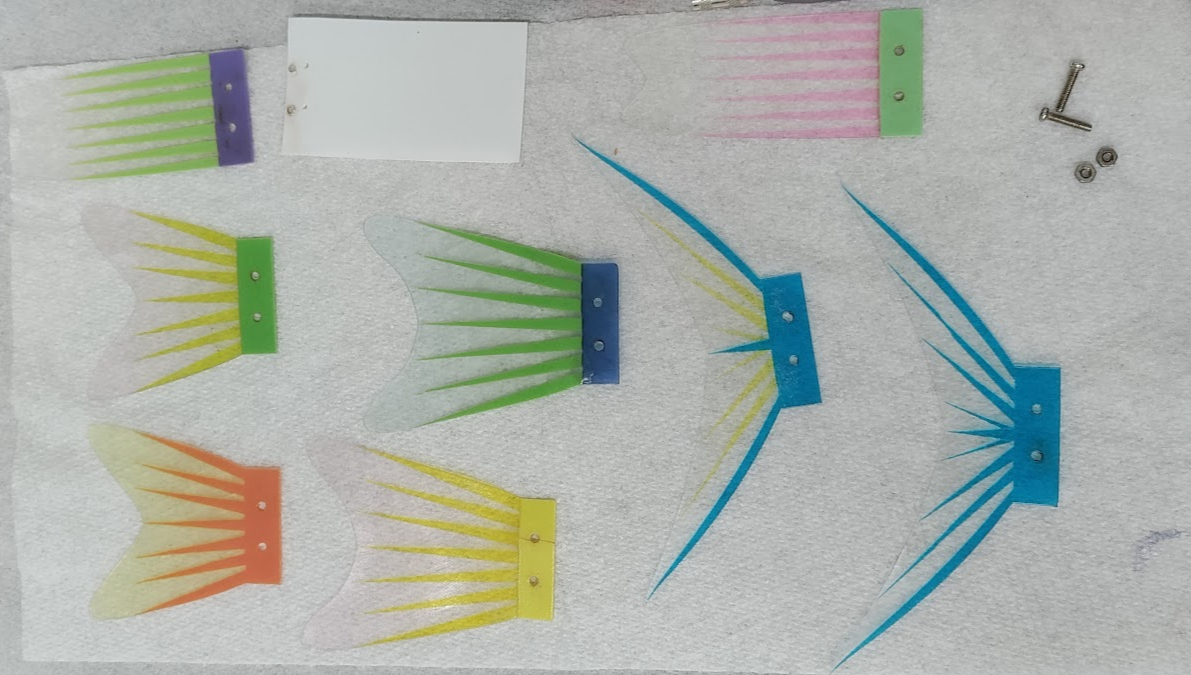
Body Elasticity Control
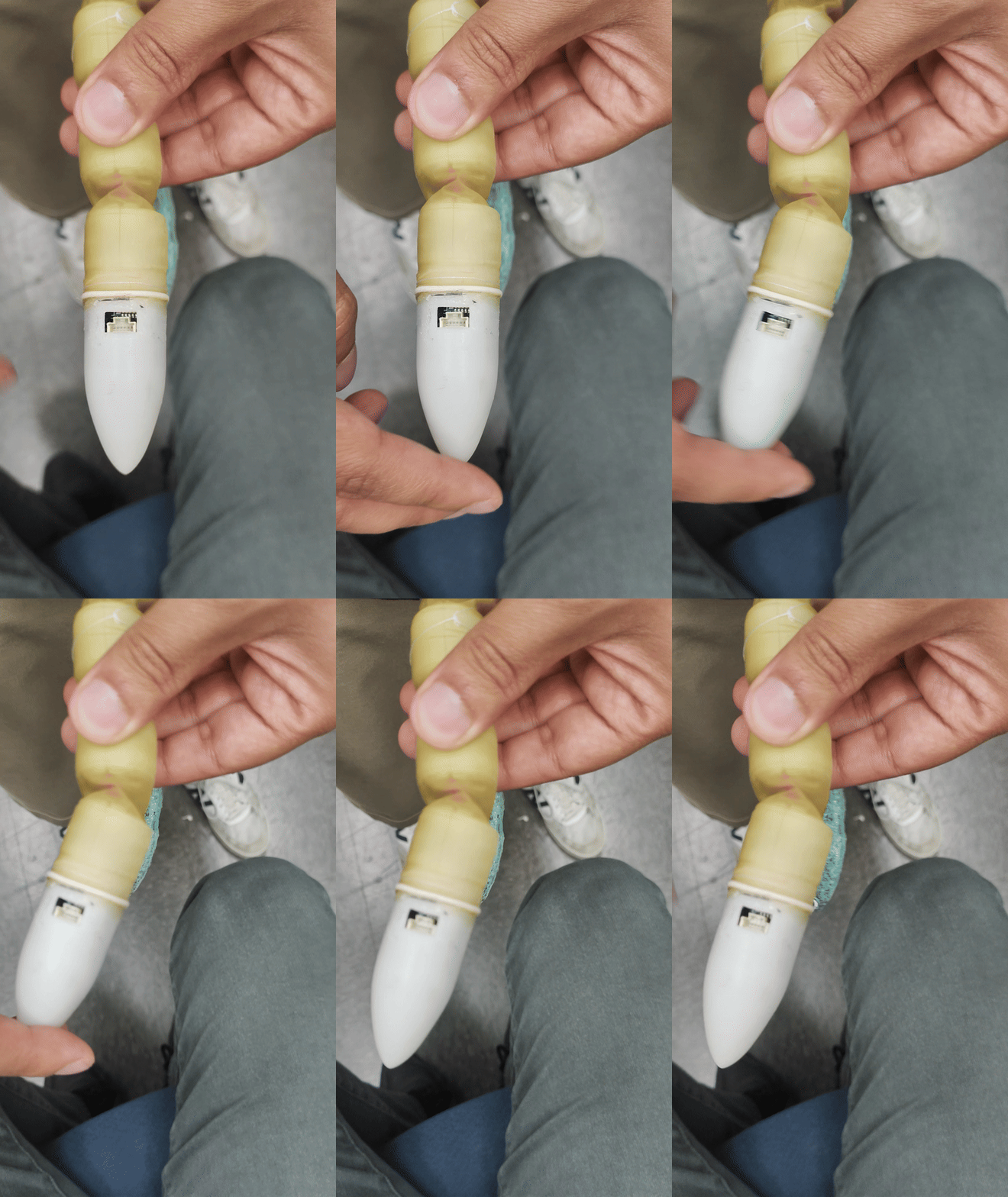
Suit with slack, plastic behaviour
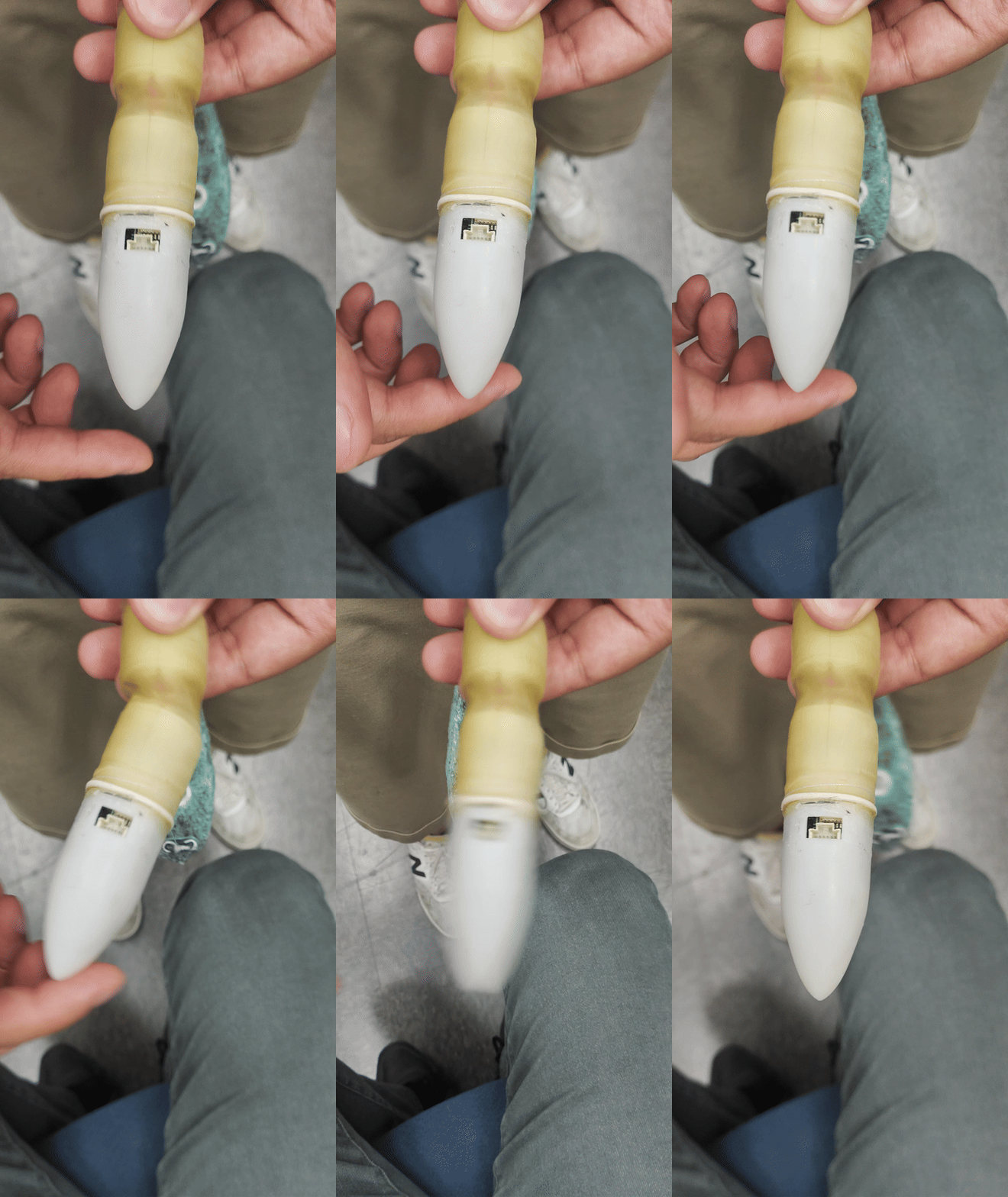
Taut suit, elastic behavior
During our pilot studies, we discovered that we can vary the body elasticity of the robot by controlling the suit length used for waterproofing. A suit with slack exhibits plastic behavior, while a taut suit demonstrates elastic behavior. This finding has prompted us to investigate the coupled effects of body elasticity and caudal fin stiffness on optimizing swimming efficiency and maneuverability across different swimming gaits.
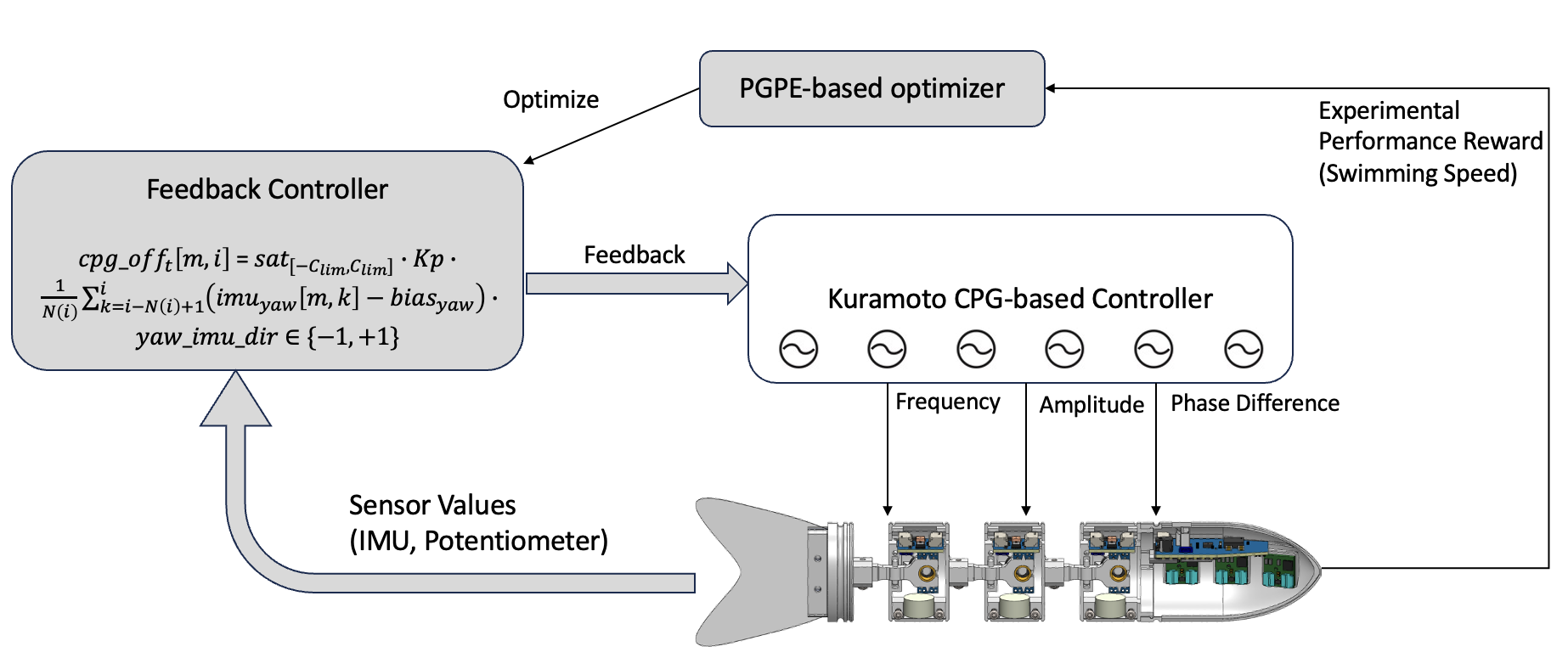
Software Pipeline
Our control system utilizes a PGPE (Policy Gradients with Parameter-based Exploration) based reinforcement learning algorithm to determine optimal Central Pattern Generator (CPG) parameters. This sophisticated pipeline enables us to achieve precise control over the robot's swimming behavior, adapting to different morphological changes while maximizing swimming speeds and maintaining efficient locomotion.
Swimming Gait Analysis
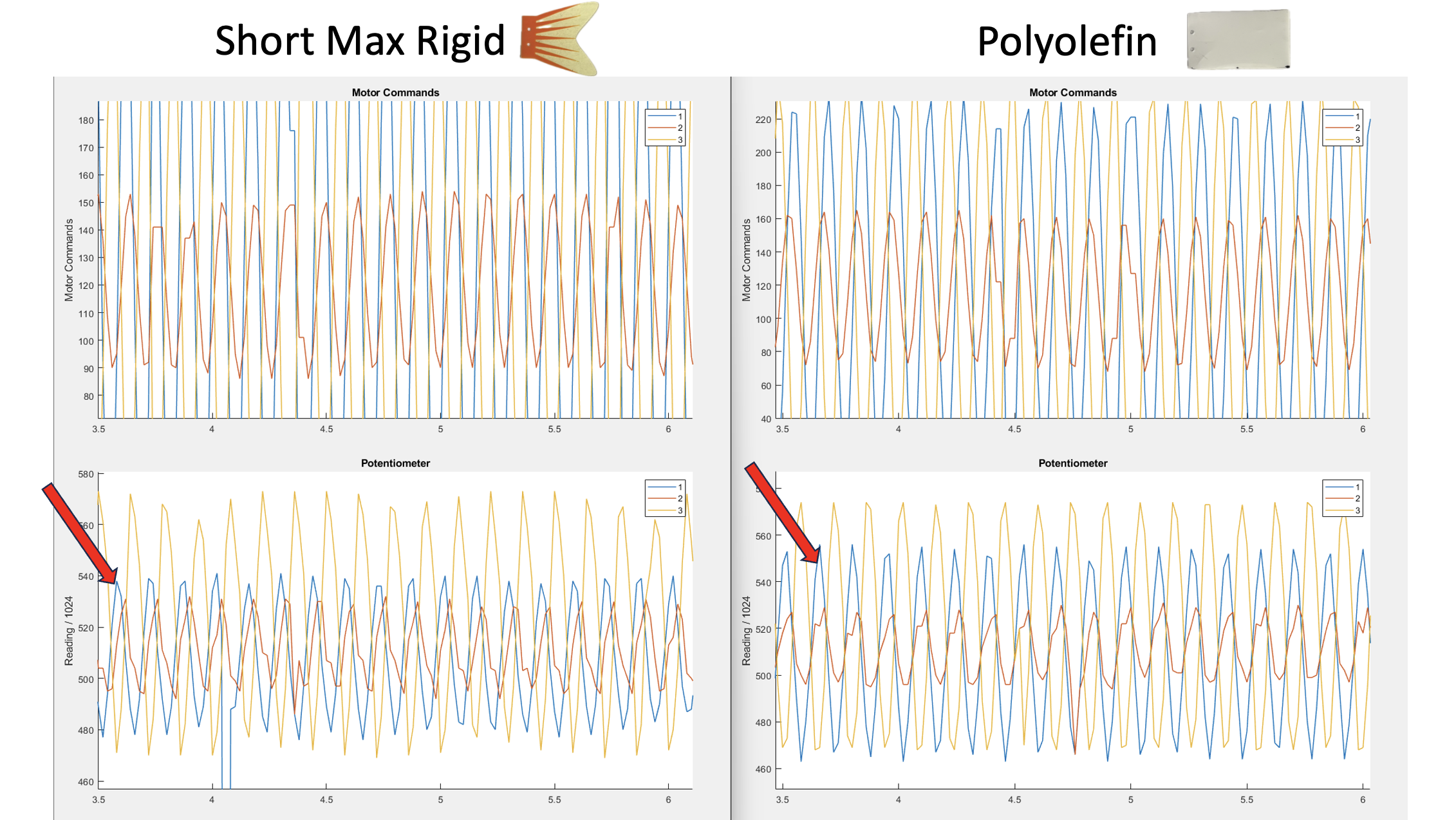
Joint angle data to study swimming gait
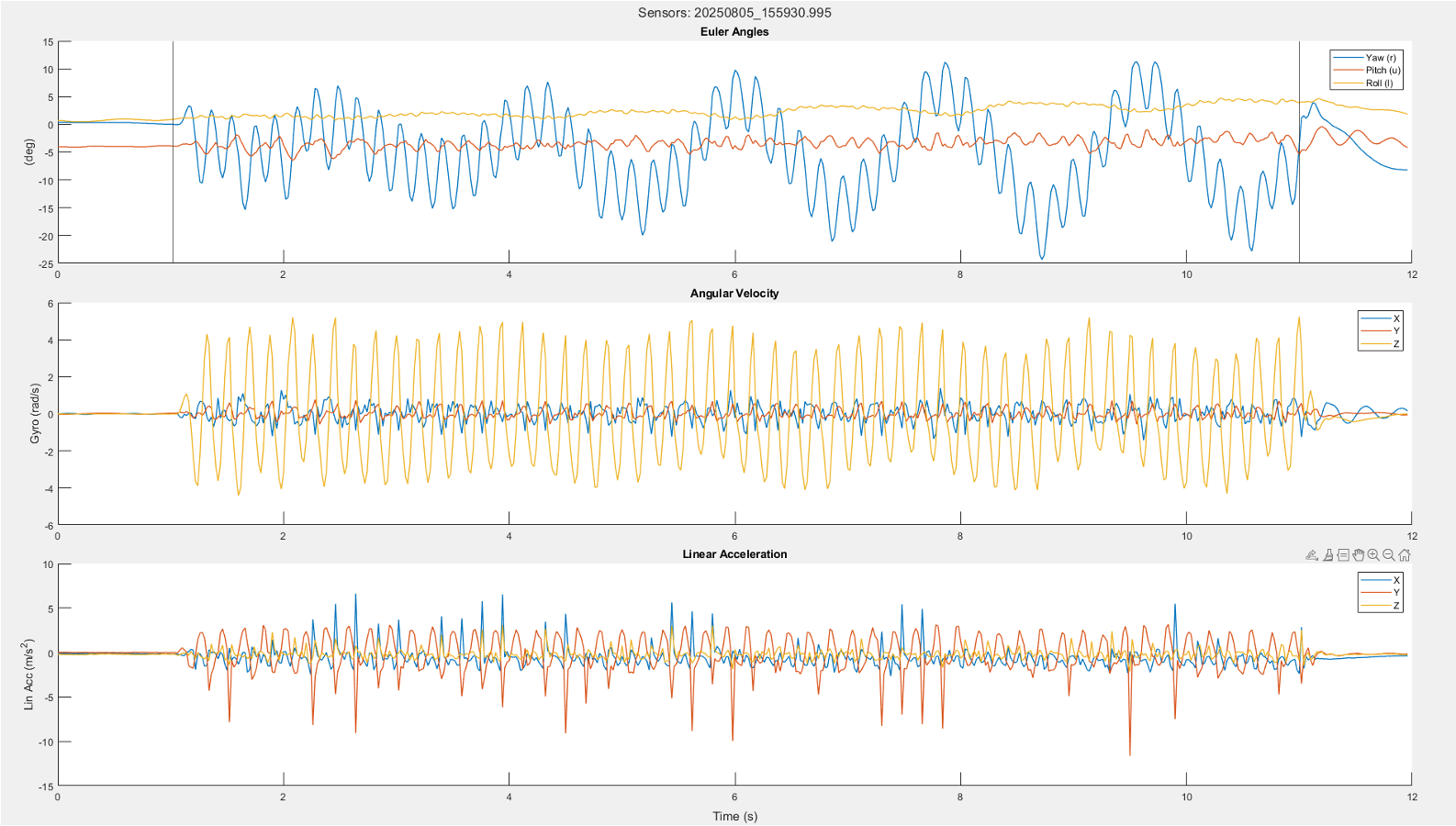
IMU sensor data for control
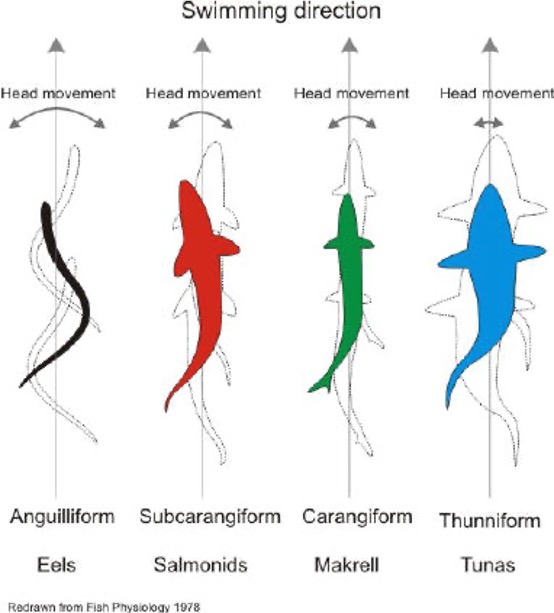
Biological fish swimming styles
We analyze swimming performance by collecting joint angle data from our potentiometer readings, allowing us to study and characterize different swimming gaits. By comparing our robot's locomotion patterns and gait with biological fish swimming styles, we aim to find some interesting relationships. In the future, we may conduct Particle Image Velocimetry (PIV) to study the hydrodynamics in more detail.
Publications
Publications Coming Soon
No current publications. One first-author publication (master's paper) and 2 co-author papers (for lab mate project contributions) will be added very soon.
Upcoming Publications - Submission in Jan 2026
Master's Thesis Paper
Research on embodied intelligence in robotic swimming systems
Lab Collaboration Papers (2)
Contributing to lab mate research projects and publications