Arnab's Mechanical Engineering & Robotics Portfolio
Brief About Me
Hello! My name is Arnab Gupta, and I am a master's student in Mechanical Engineering at Pennsylvania State University, working at the Biological & Robotic Intelligent Fluid Locomotion Lab. I am deeply passionate about robotics and its potential to help people and address real-world challenges, and I strive to apply and expand my expertise to develop innovative solutions with meaningful impact. Have a look at some of my projects below!
6+
Robotics Projects Completed
MS
Mechanical Engineering
3+
Years of Research & Internship Experience
Featured Projects
Explore my portfolio of mechanical engineering and robotics projects, showcasing innovative solutions in autonomous systems, biomimetic robotics, and advanced manufacturing.
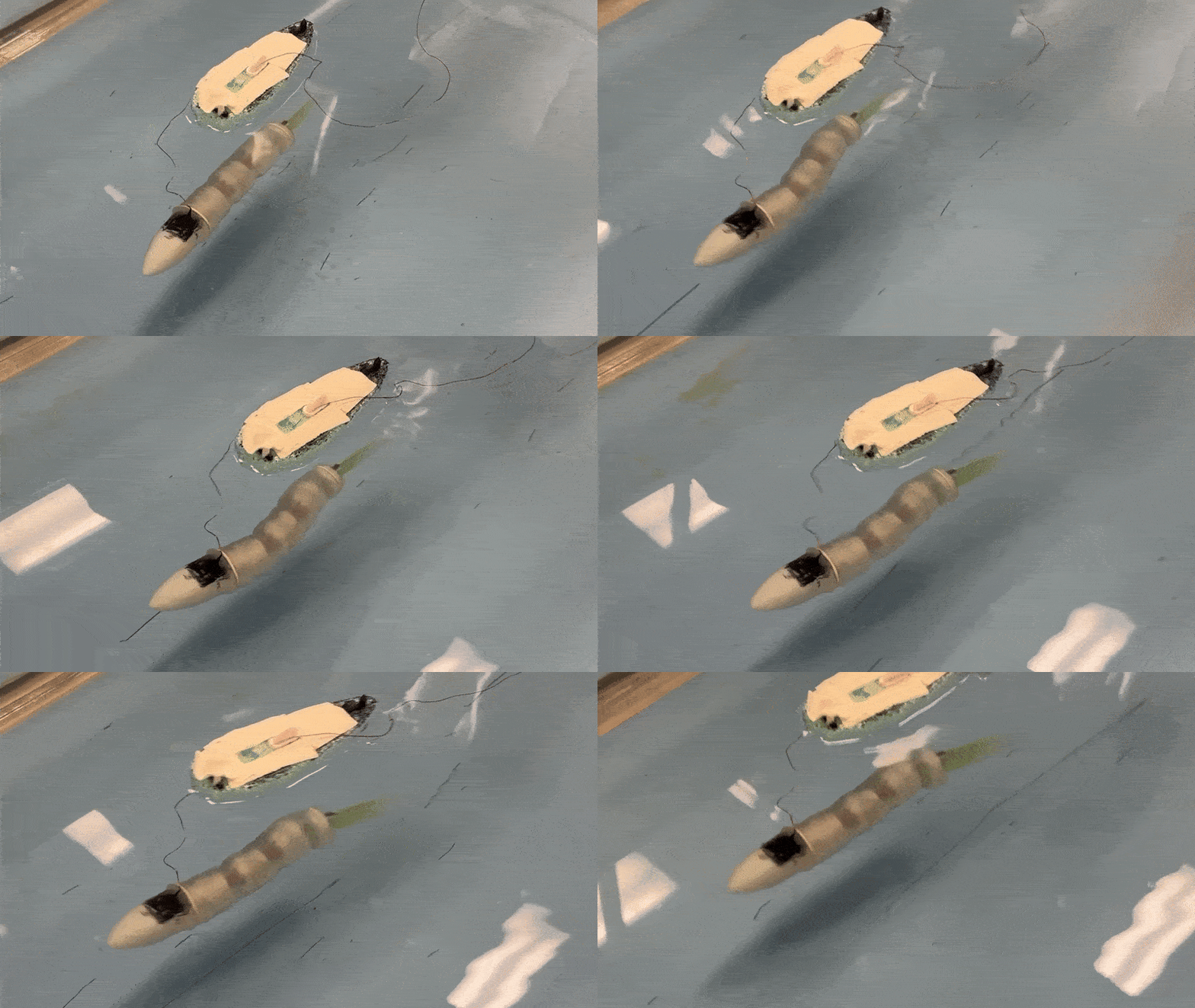
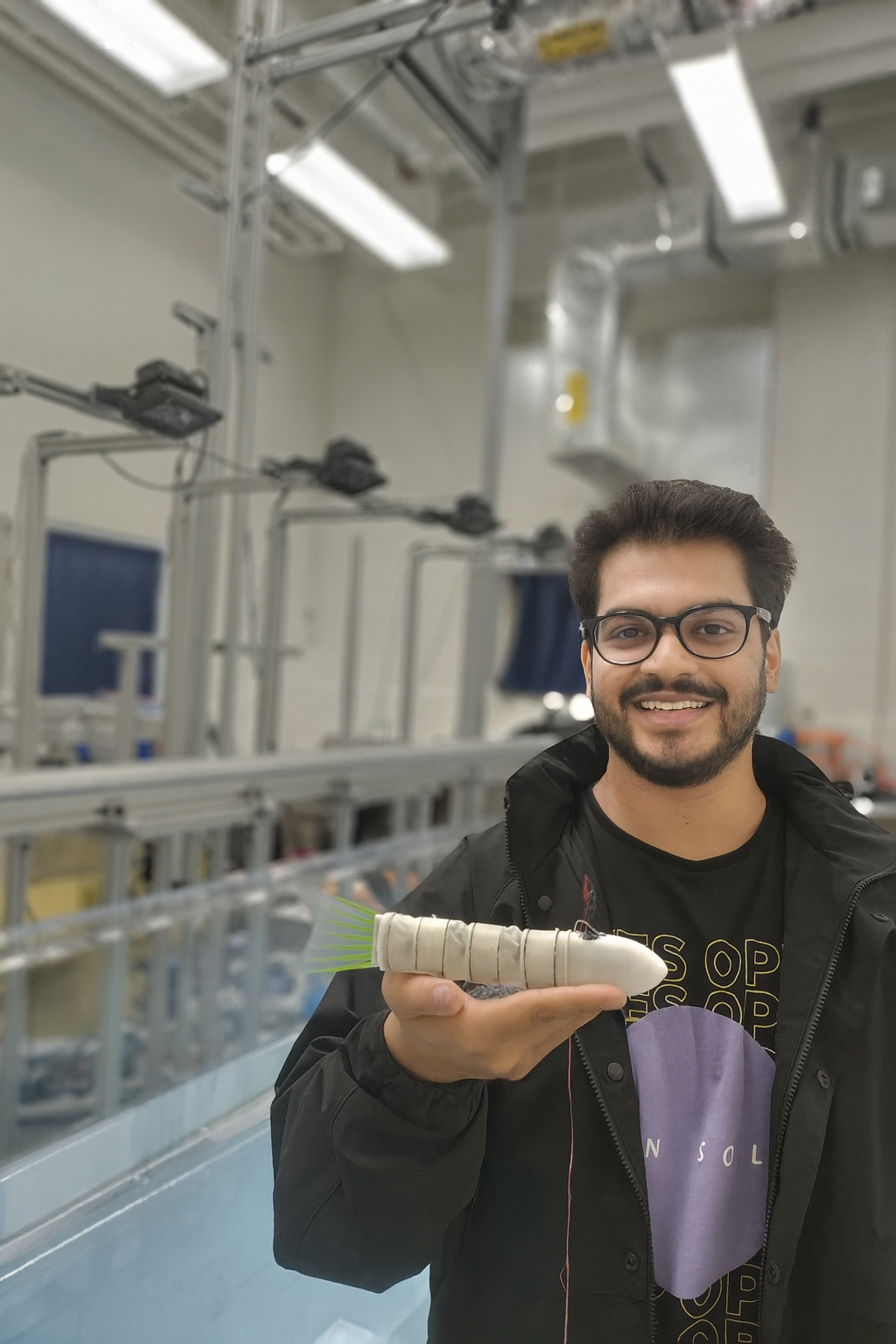
Embodied Intelligence in Robotic Swimming
This project leverages the principles of embodied intelligence to study the coupled effects of caudal fin stiffness and body elasticity while optimizing CPG motor commands. Through this work, I aim to identify efficient swimming gaits and maximize forward swimming speeds in our modular undulatory robotic swimmer.
- Coupled analysis of body elasticity and caudal fin stiffness in MuBot
- Optimized CPG motor commands using PGPE-based reinforcement learning
- Explored embodied intelligence as a driver of efficient aquatic locomotion
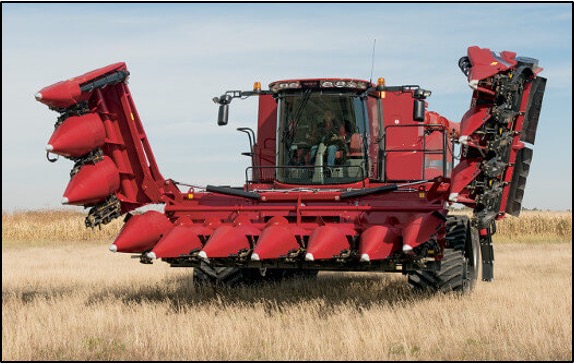
CNH Industrial Deck Plate Mechanism Improvement for Folding Corn Headers
Capstone project in collaboration with CNH Industrial focused on redesigning the deck plate mechanism of folding corn headers to improve durability, reliability, and ease of operation.
- Partnered with CNH Industrial to improve folding corn header mechanism
- Conducted root cause analysis of existing deck plate wear and failure points
- Balanced design for manufacturability, cost, and operator usability
- Delivered the final designed prototype and presented to experienced CNH engineers
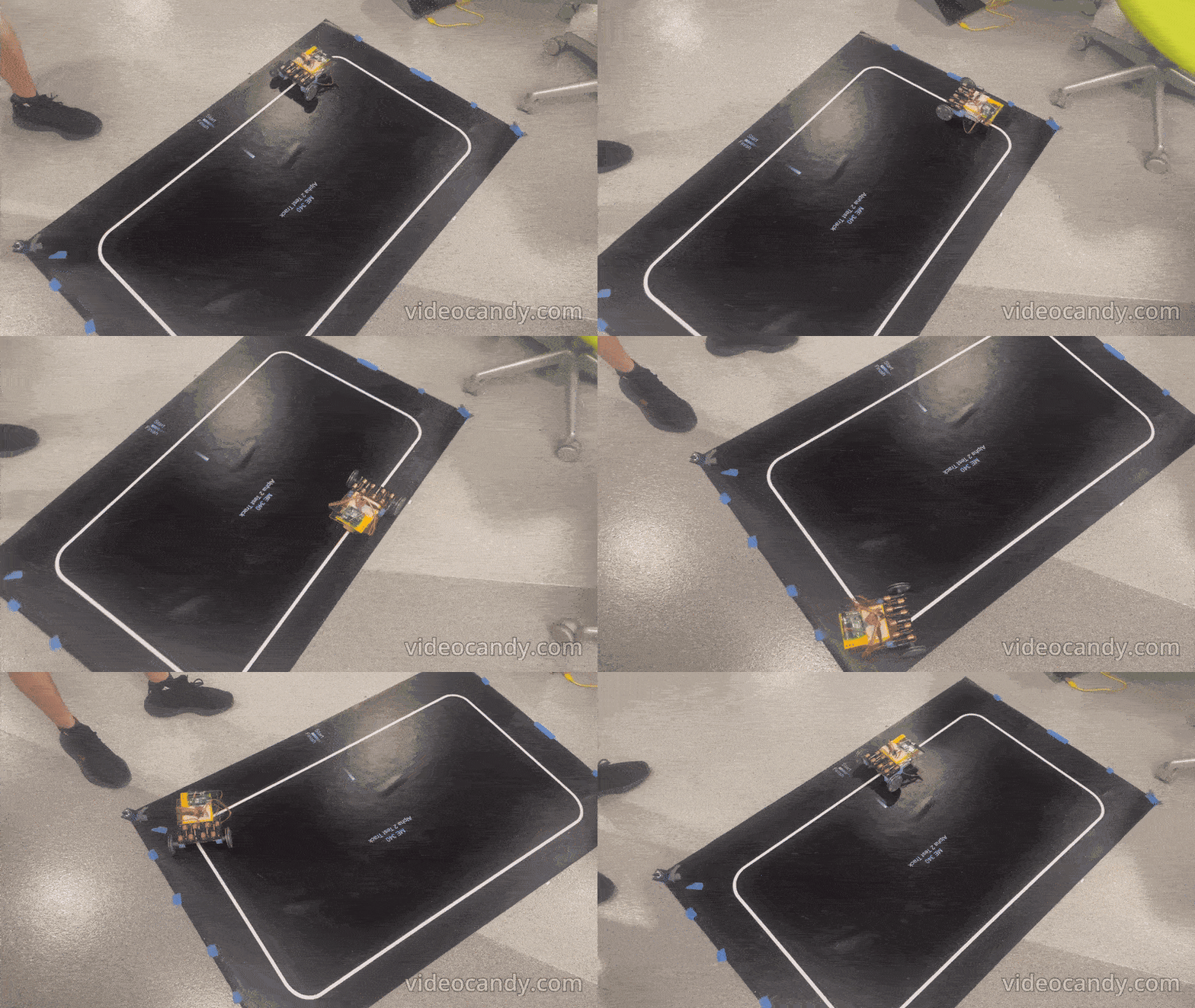
Autonomous Line Following Robot
An Arduino-based autonomous mobile robot designed to follow a white line outdoors using infrared (IR) sensors and a differential drive system. The project focused on optimizing control responsiveness, chassis design, and stability for smooth, high-speed navigation across complex track layouts.
- Designed and 3D-printed custom chassis and wheel prototypes
- Implemented IR sensor feedback with Arduino (<0.1s respnose time) for line detection
- Integrated modular electronics layout: Arduino Uno, motor driver, IR sensor array, and battery system
- Calibrated sensor thresholds to adapt to varying lighting and surface conditions during outdoor tests
- Developed multiple prototypes leading to a final optimized design with low center of gravity
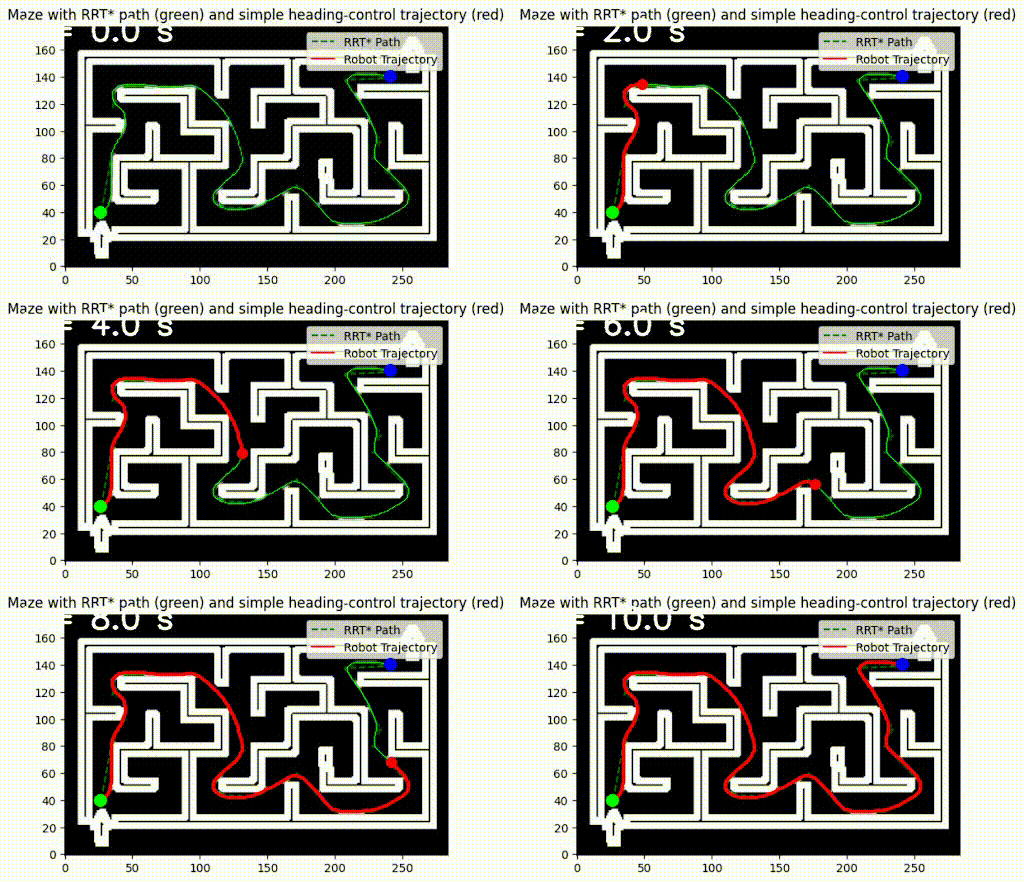
RRT* Maze Path Planning with Differential-Drive Tracking
End-to-end pipeline that converts a maze image to a binary obstacle map with OpenCV, computes a collision-free path via RRT*, and simulates a differential-drive robot that follows the path using a simple heading controller.
- Canny edge detector + dilation to build a robust obstacle map from raw images
- Implemented RRT* (steer, near-neighbor rewiring, collision checks)
- Path-to-trajectory tracking with heading control integrated via solve_ivp
- Constant-velocity P-heading controller tuned for smooth, wall-free tracking
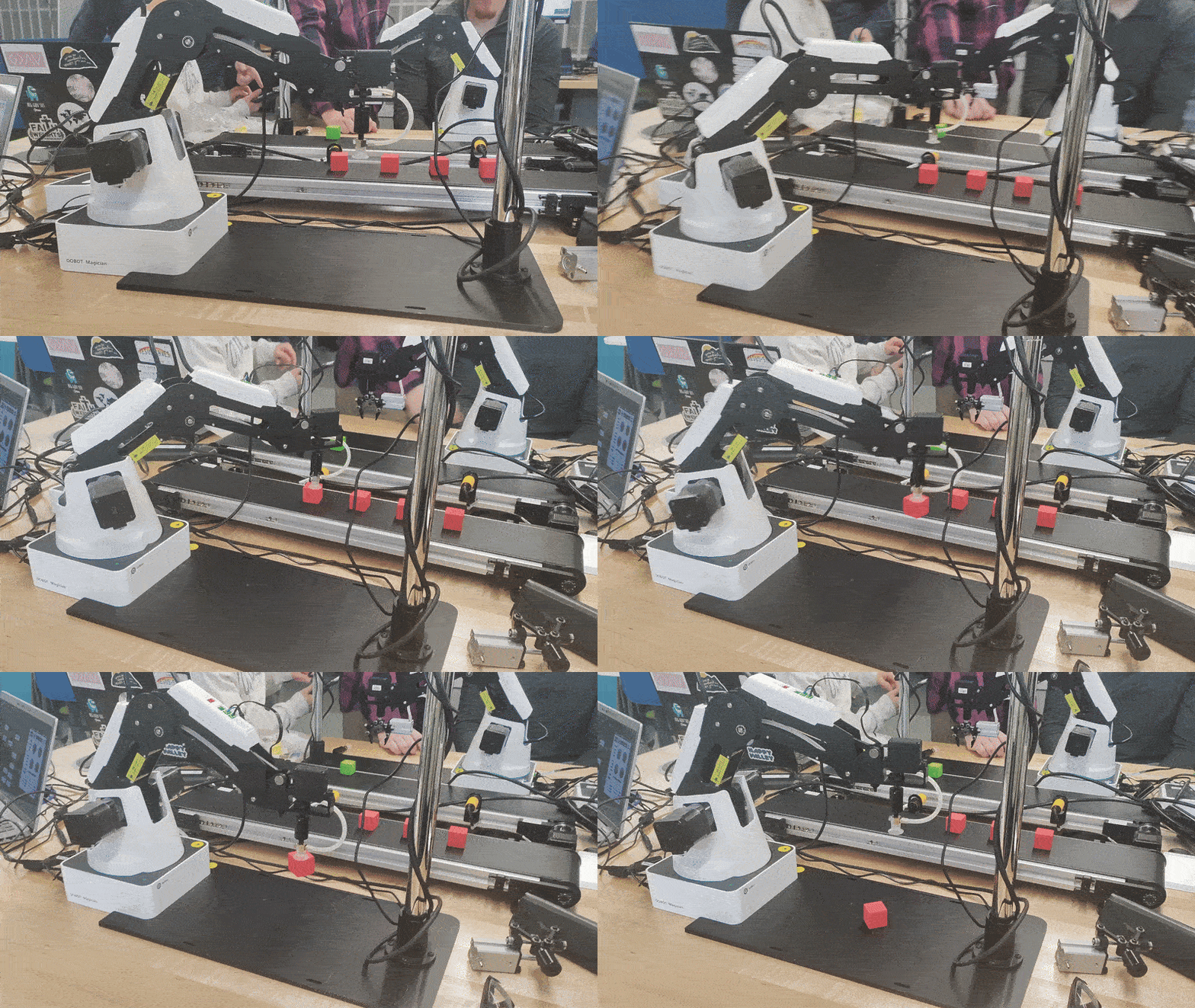
Dobot Magician Robotic Arm — Spelling Game Solver
Programmed a Dobot Magician to solve a children's spelling game by selecting alphabet cut-outs and placing them into the correct board slots to complete words. Combines pick-and-place routines with careful workspace setup for consistent, accurate placements.
- Automated pick-and-place sequence to spell target words
- Workspace calibration & coordinate transforms for accurate slot placement
- Top-down computer-vision system detects letters and board slots
- Suction end-effector for reliable handling of letter cut-outs
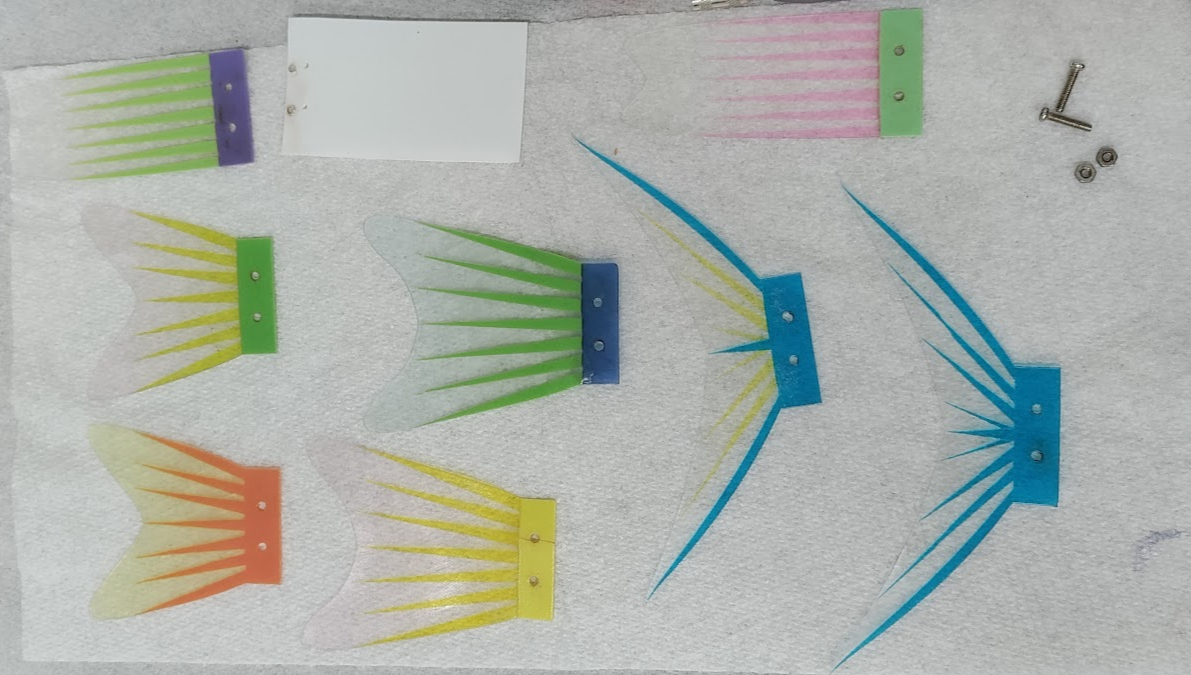
Variable Stiffness Caudal Fins for MuBot
Explored the impact of variable stiffness 3D-printed caudal fins on the swimming performance of MuBot, a bio-inspired robotic fish.
- Designed bio-inspired caudal fins with gradient and spined stiffness patterns
- Fabricated fins using Stratasys J55 with variable elasticity materials and conducted real swimming experiments
- Discovered two fin designs that outperformed the previously accepted optimal stiffness
- Linked morphological variations to differences in swimming gaits, highlighting embodied intelligence
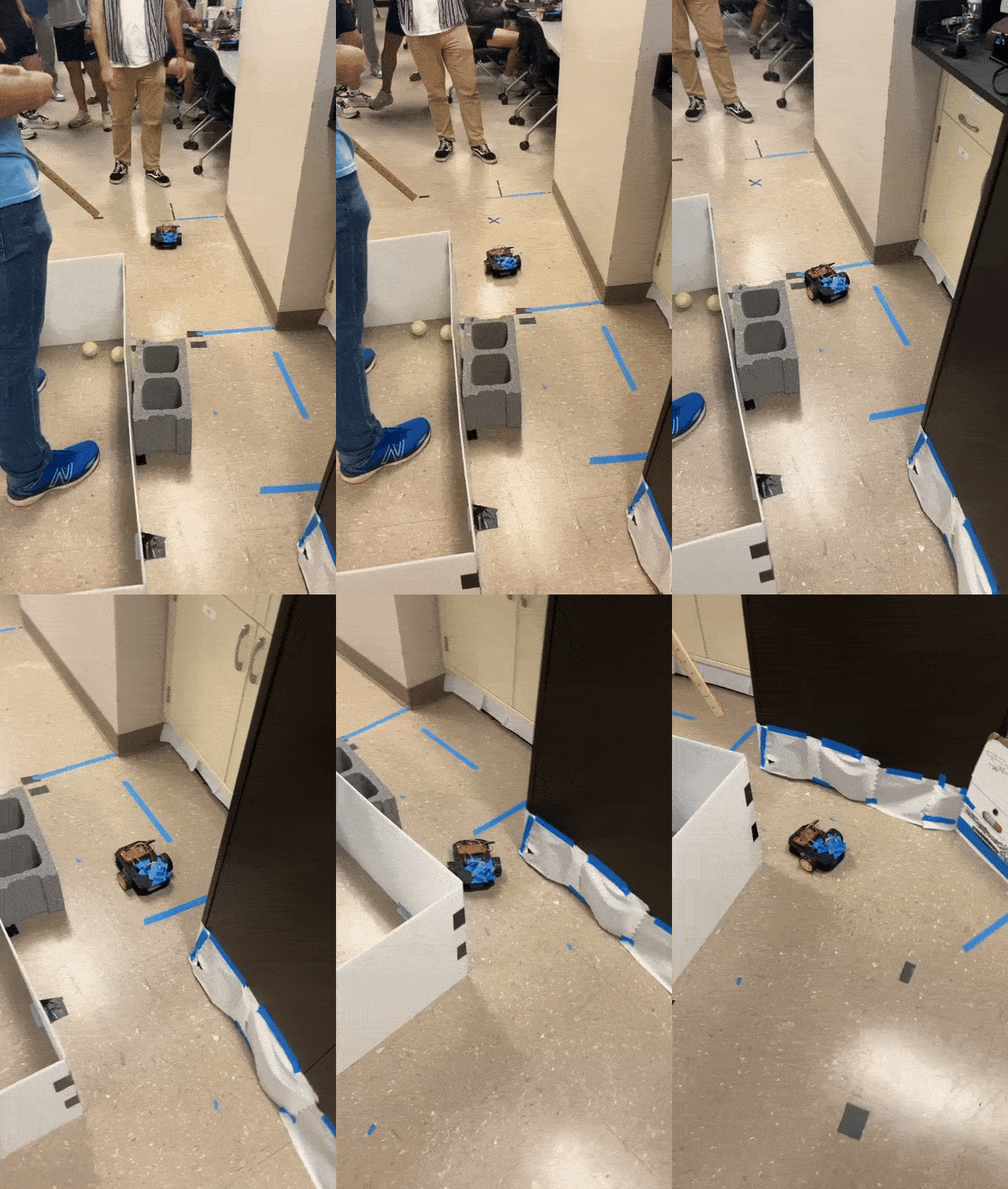
Autonomous Wall-Following Robot (IR / Arduino)
Programmed a robot to follow walls at a fixed standoff using IR sensors, track curves/corners within a time limit, and execute a straight-in approach that stops as close to the wall as possible. All logic implemented on Arduino IDE with lightweight filtering and state control.
- IR-based distance regulation to maintain target wall standoff
- Curves & corner handling with smooth heading updates (no wall contact)
- Precision stop routine: straight approach → detect wall → brake at minimum gap
- Median/threshold filtering on IR readings to reduce noise & glare
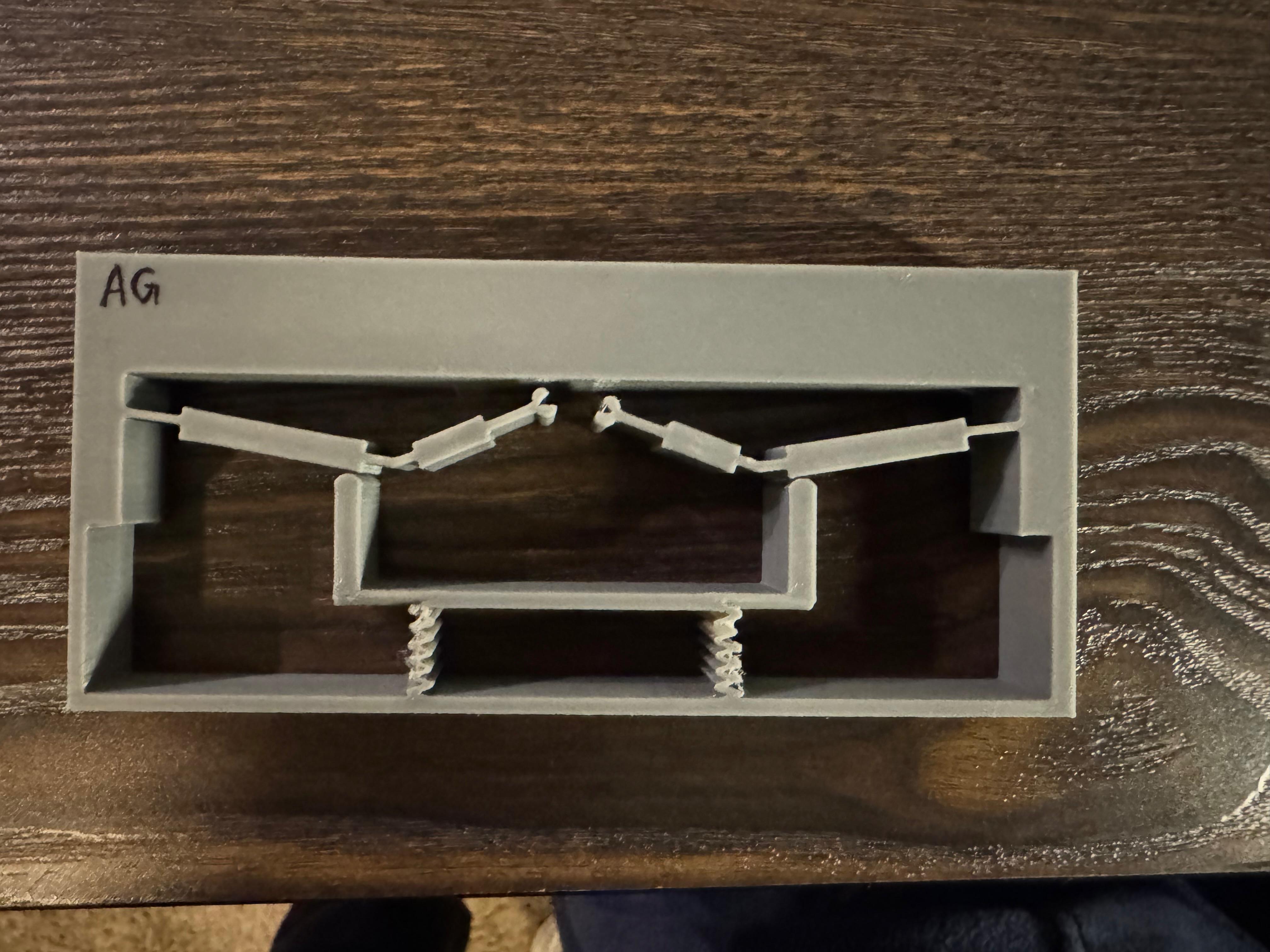
Fully Compliant Constant-Force Gripper (End-Effector Design)
Designed, modeled, and 3D-printed a fully compliant robotic gripper that targets constant output force over a range of input displacements. The end-effector uses a double slider-crank inspired compliant mechanism with pseudo-rigid-body modeling and virtual-work analysis to reduce part count, assembly, and cost for soft-robotics applications.
- Compliant slider-crank inspired geometry targeting near-constant output force
- Pseudo-rigid-body + virtual-work formulation to relate input/output forces
- Iterative CAD → print → test loop; flexure sizing and motion constraints refined
- Prototype demonstrates functional gripping with dramatically reduced part count
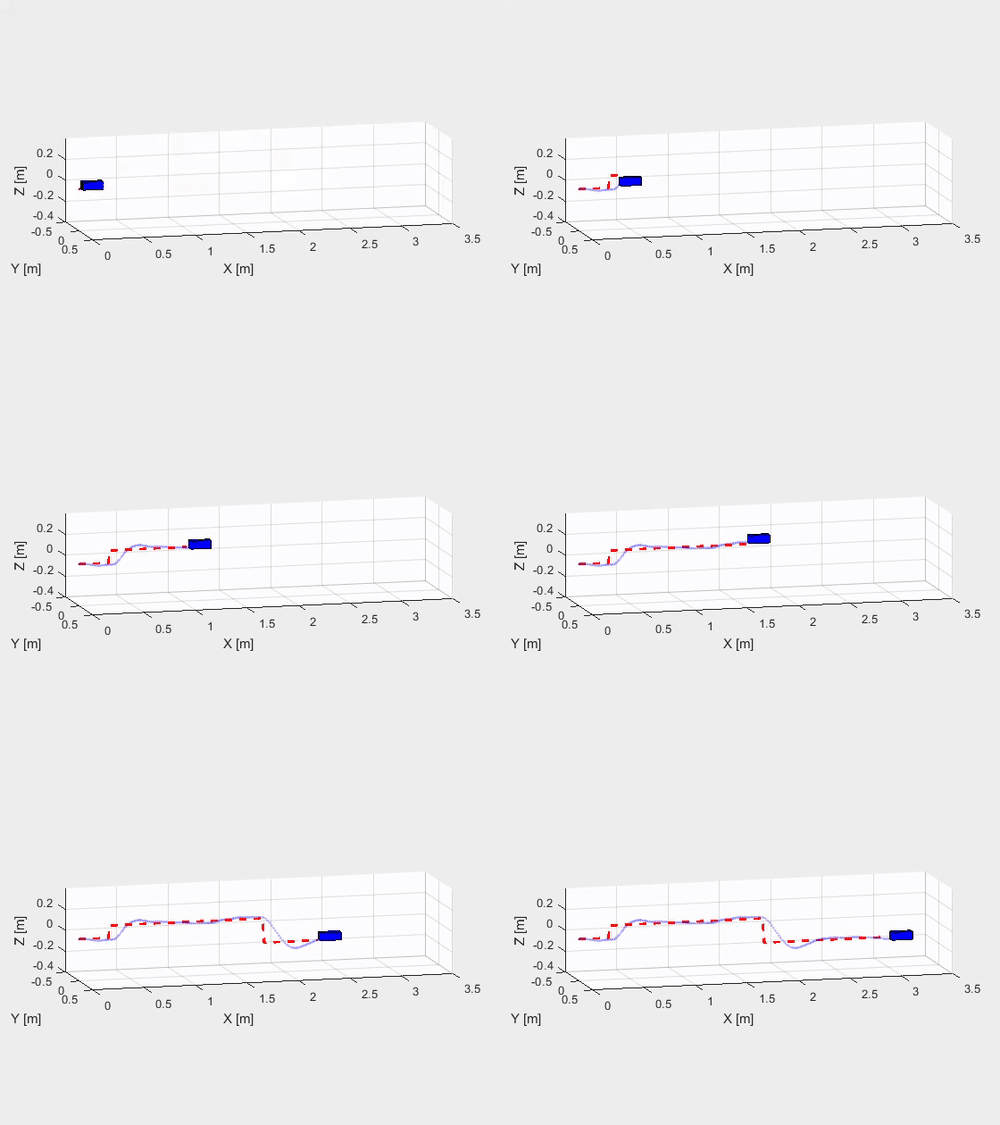
Autonomous Depth Control for MuBot (PID-Regulated BCD)
Designed and simulated a PID controller that regulates an adaptive buoyancy control device (BCD) to track reference depth trajectories under underwater disturbances. Built a physics-based model and implemented closed-loop Simulink with pressure-sensor feedback.
- Derived buoyancy + actuator model and combined into a fifth-order plant for depth control
- Closed-loop PID in Simulink with pressure-sensor feedback and injected current/noise disturbances
- Tracks randomized step depth commands (±0.35 m) with reasonable accuracy
- Observed lag/overshoot and minor oscillations near setpoint; validated baseline strategy
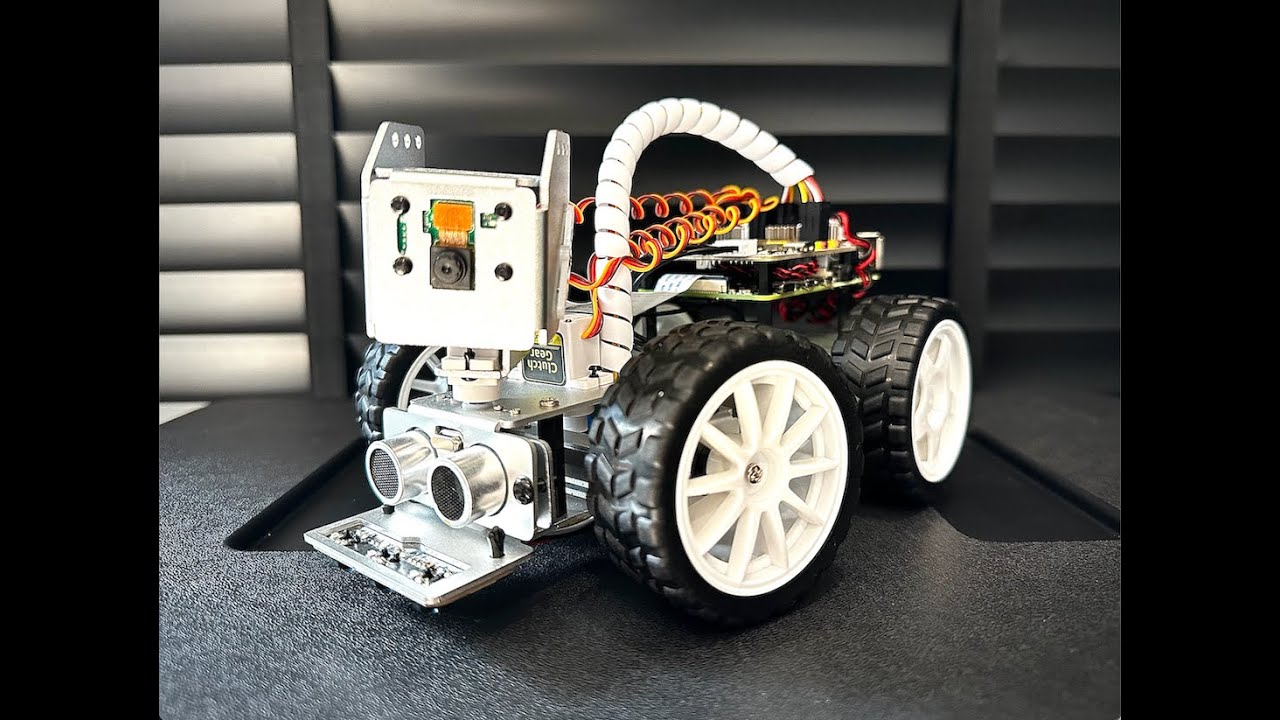
PiCar-X Caterpillar-Tracking Robot (SunFounder, Raspberry Pi)
Assembled and programmed a SunFounder PiCar-X (Raspberry Pi) to autonomously locate and follow green caterpillars using onboard computer vision. The robot reorients for better viewpoints, captures images, and feeds them into a lightweight detection model trained with Roboflow.
- Built on SunFounder PiCar-X (Raspberry Pi camera + UI upload workflow)
- Computer-vision pipeline: color filtering to isolate green caterpillars
- Autonomous reorientation around plants for improved viewpoints
- Automated image capture and dataset growth during field runs
- Trained a CNN-based object detector (Roboflow/YOLO) on collected images (~33% validation on pilot set)
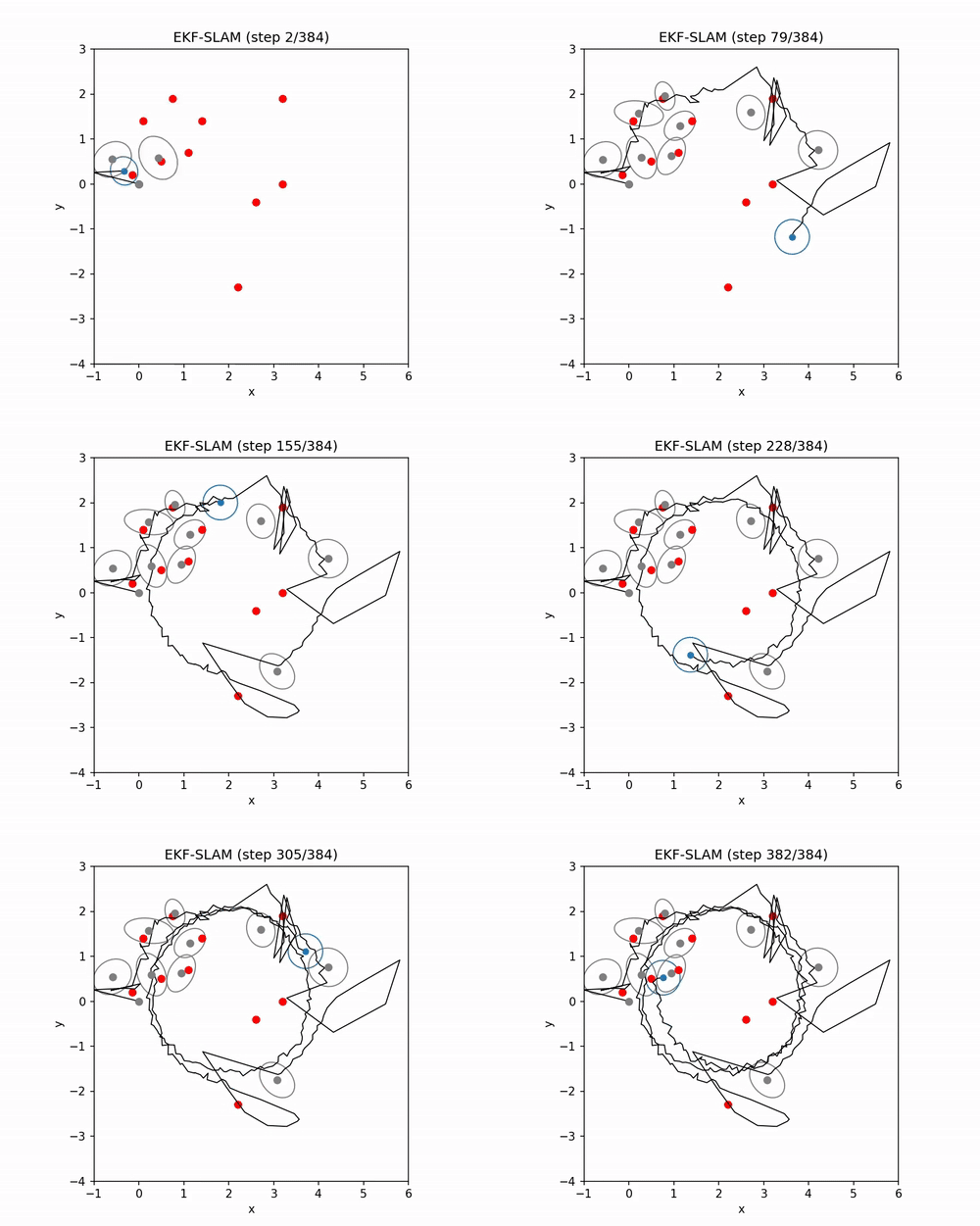
EKF SLAM on Differential Drive Robot
Implemented an Extended Kalman Filter (EKF)-based SLAM algorithm for a differential drive robot equipped with a range-bearing sensor. The robot drives in a circular trajectory while estimating both its pose and landmark obstacle positions in an unknown environment.
- Formulated EKF-SLAM for a differential drive robot with range-bearing observations
- Simulated motion with [u₁, u₂] = [1, −½] driving in a circular path for 8π seconds
- Plotted estimated map and covariance ellipses for robot and landmarks at key times (1 s, loop closure, post-closure)
- Demonstrated loop-closure consistency and reduced landmark uncertainty after revisiting known regions
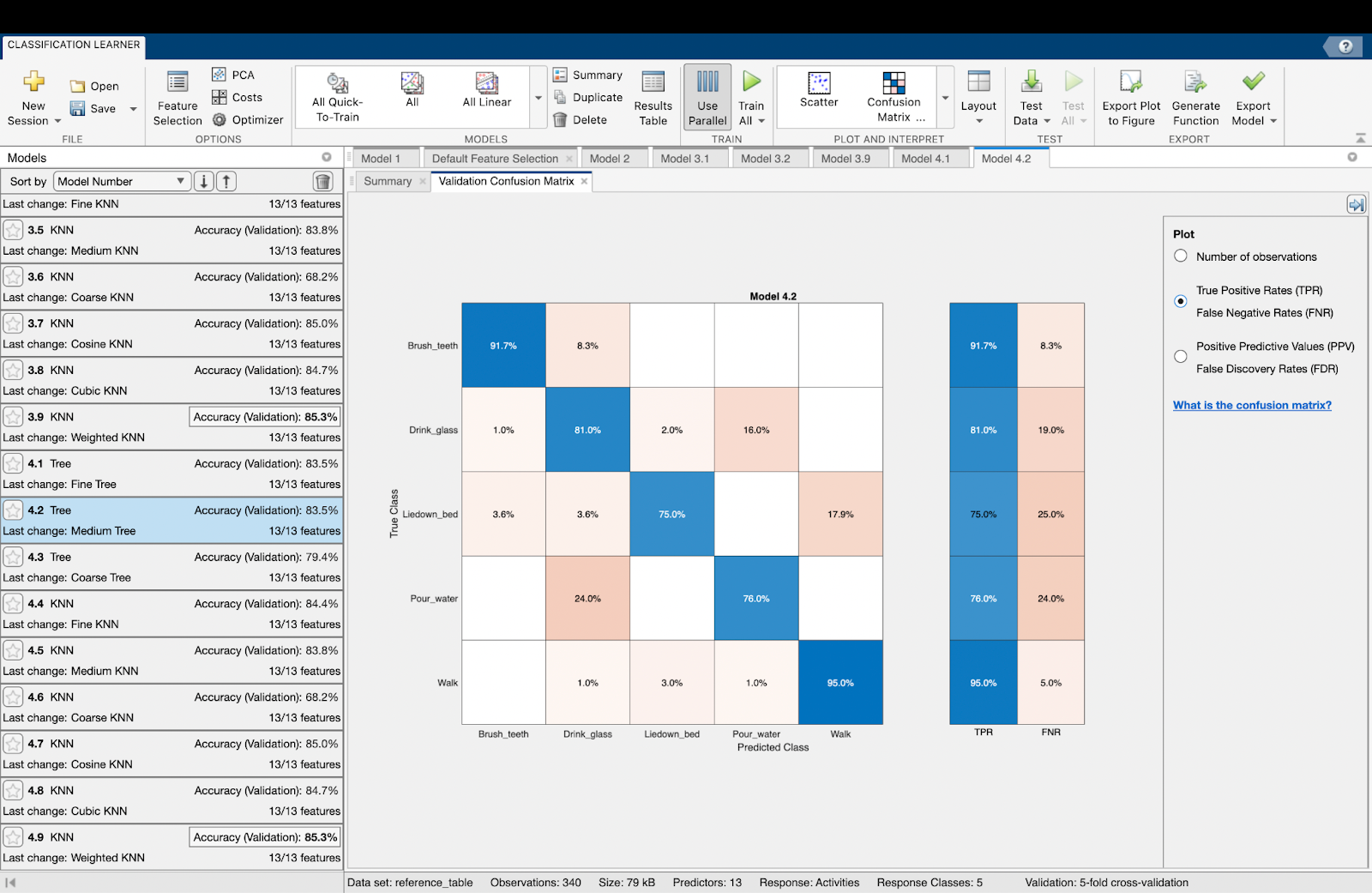
Wearable Sensor Data Classification using Machine Learning
Developed and trained a machine learning pipeline to classify physical activities from wearable sensor data. The system processes accelerometer and gyroscope signals to identify common user movements such as walking or laying down, demonstrating the potential of ML-based activity recognition for health and fitness applications.
- Collected accelerometer and gyroscope data from wearable sensors
- Preprocessed and filtered time-series data for noise reduction and extracted statistical features for model training
- Trained supervised learning models to classify user activities
- Evaluated classification accuracy and validated model performance using test datasets